KPop Demon Hunters Locations: Which Ones Are Actually Worth It
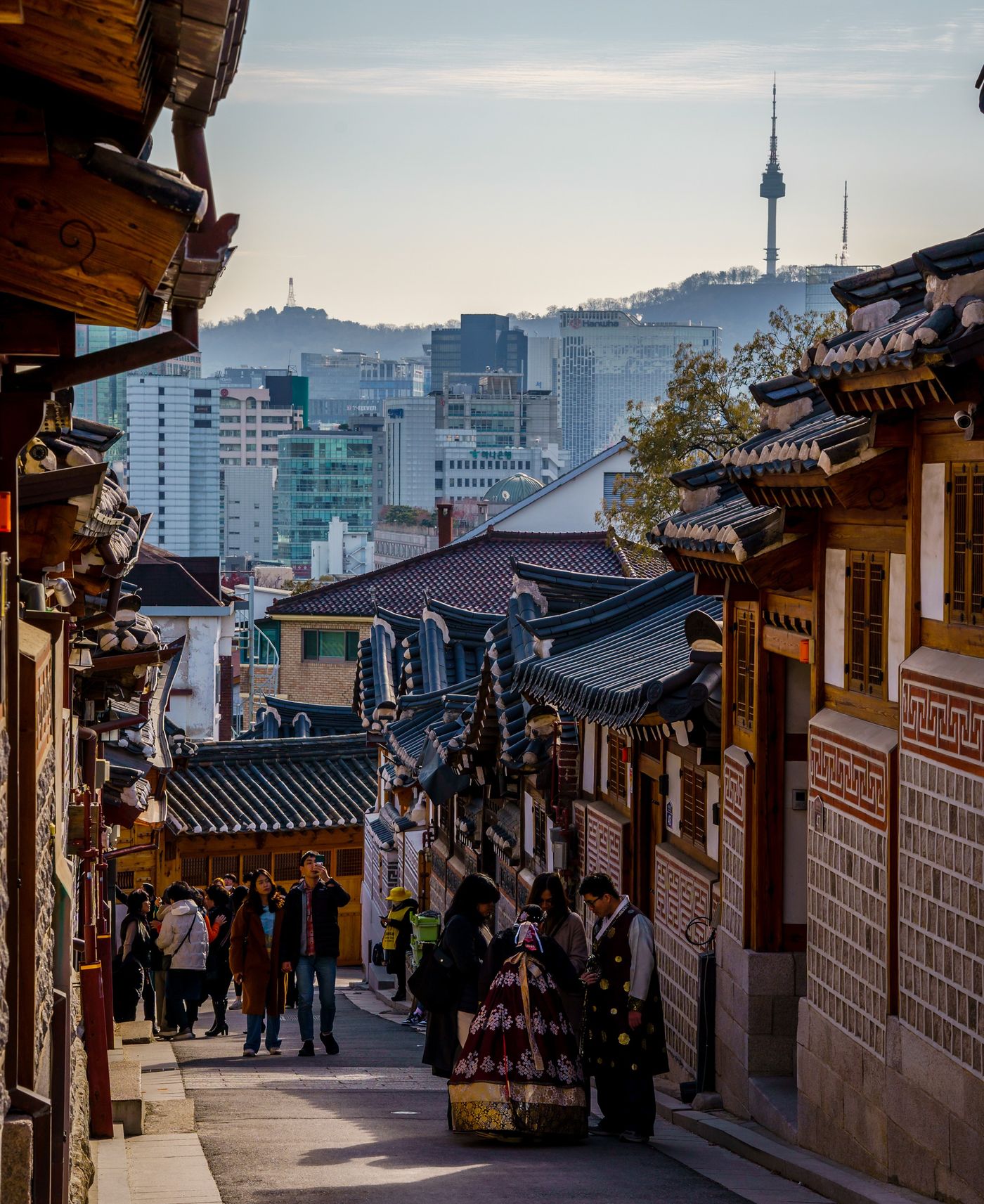
There is no film set. KPop Demon Hunters is animated, made by Sony Pictures Animation, and every "filming location" article you have read about it is describing something that never physically happened. What actually happened is stranger and more useful to you: the art department researched real Seoul neighborhoods, walked them, photographed them, and rebuilt them as drawings. Some of those drawings are close enough to the real place that you can stand where the animators stood. Most of the internet's "10 must-see KDH locations" lists cannot tell you which ones, because they never checked.
One of them can get you fined. Bukchon Hanok Village, the neighborhood behind Rumi and Jinu's first meeting in the film, is Korea's first officially designated overtourism Special Management Zone. Walk the wrong alley after 5pm and a resident can report you for a fine of up to ₩100,000. Nobody putting out a top-10 list is telling you that either.
What's Officially Confirmed, and What's Fan Guesswork
Netflix's own Tudum site published a locations feature with named crew attribution, which makes it the only source worth trusting for what is real versus invented. Everything else online — including several sites that present themselves as location guides — mixes confirmed references with fan speculation without labeling which is which. Here is the full breakdown.


| Location | Status | What it's tied to in the film |
|---|---|---|
| Bukchon Hanok Village | Confirmed | Rumi and Jinu's first meeting scene, and the setting for a later "Free" sequence |
| Naksan Park & Seoul City Wall | Confirmed | Rumi and Jinu's second meeting, on the wall path above the city |
| N Seoul Tower | Confirmed (partially invented) | The landmark beacon is real; the arena underneath it does not exist |
| Myeongdong | Confirmed | The "Soda Pop" performance sequence, per production designer Mingjue Helen Chen |
| COEX K-Pop Square | Confirmed | The billboard announcement scene |
| Gyeongbokgung Palace | Confirmed | Jinu's 400-year-old flashback |
| Cheongdam Bridge | Confirmed | The train fight sequence, built from real satellite terrain data of Seoul that the VFX team used across the film |
| Seoul Olympic Stadium | Confirmed | The opening skydive sequence |
| Lotte World Tower | Inspiration only | Environmental art director Celine Kim confirmed the in-film tower was drawn deliberately taller than the real one |
| A jjimjilbang / bathhouse | Not a real place | A composite built from director Maggie Kang's memory of 1980s Seoul bathhouses — nobody can take you to "the" one |
| National Museum of Korea | Not in the film | Does not appear on screen. It's the cultural source: the minhwa kkachi-horangi (magpie-tiger) folk painting tradition Kang cited as the origin of Derpy and Sussie |
Two more things worth knowing before you plan around a guide that isn't this one. There is no official KDH exhibition at the National Museum — some blogs promise one and there isn't. And COEX's famous WAVE 3D aquarium screen, which several guides still describe as current programming, was a specific media-art commission from May 2020. It is not running on a schedule now. If a post tells you to time your COEX visit around it, that post hasn't been updated.
Worth Going: The Four That Actually Repay the Trip
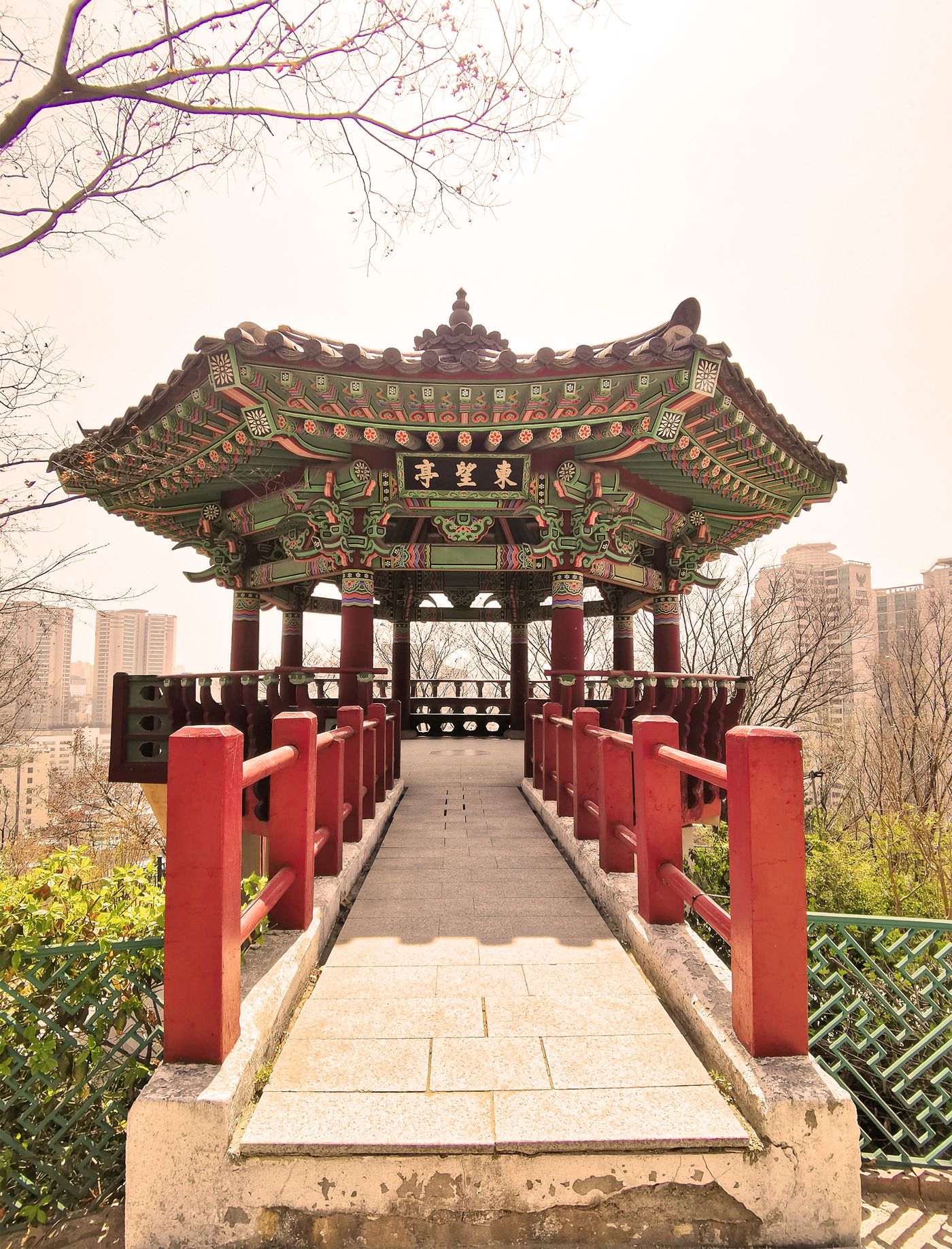
Naksan Park and the Seoul City Wall. Take Line 4 to Hyehwa Station, Exit 2, and walk about 15 minutes uphill — just over half a kilometer. It's free and open 24 hours. The official city wall route here (Course 2) runs 3.2 km from Hyehwamun to Heunginjimun, takes about an hour at a moderate pace, and tops out at 124 meters. On the way you'll pass Bukjeong Village and Ihwa Mural Village, which are real residential streets — locals living there have filed noise complaints about tourists, so keep your voice down after dark.
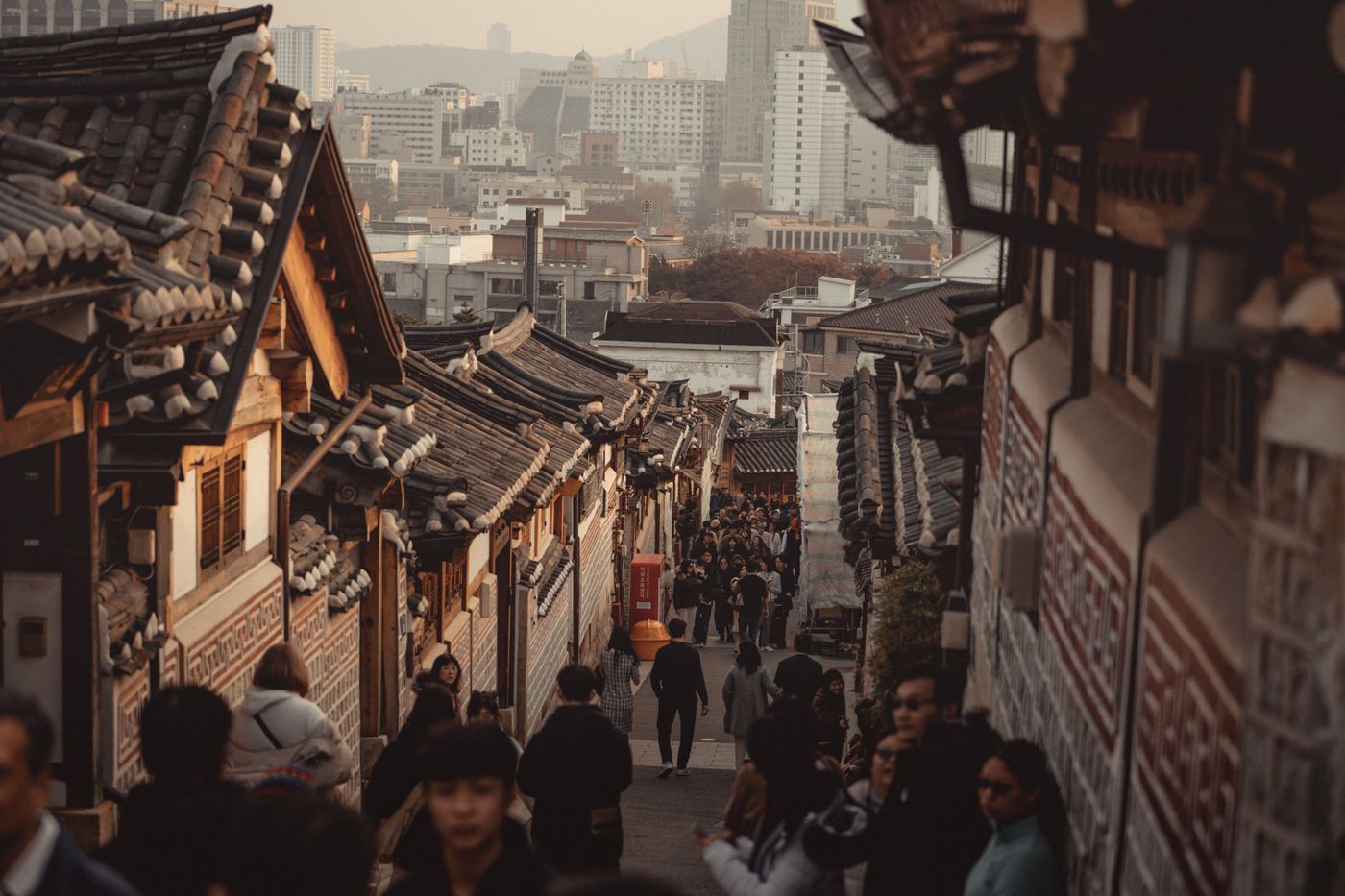
Bukchon Hanok Village. Anguk Station, Line 3, Exit 2, then about 10 minutes uphill. Free. The hanok are private homes — there's no interior access, and the film's empty, silent alleys bear no resemblance to what you'll actually find at midday, which is closer to the photo above. Come early or come at dusk if you want anything close to the mood the movie is selling you. The restricted zone rules below apply here specifically, so read them before you go.
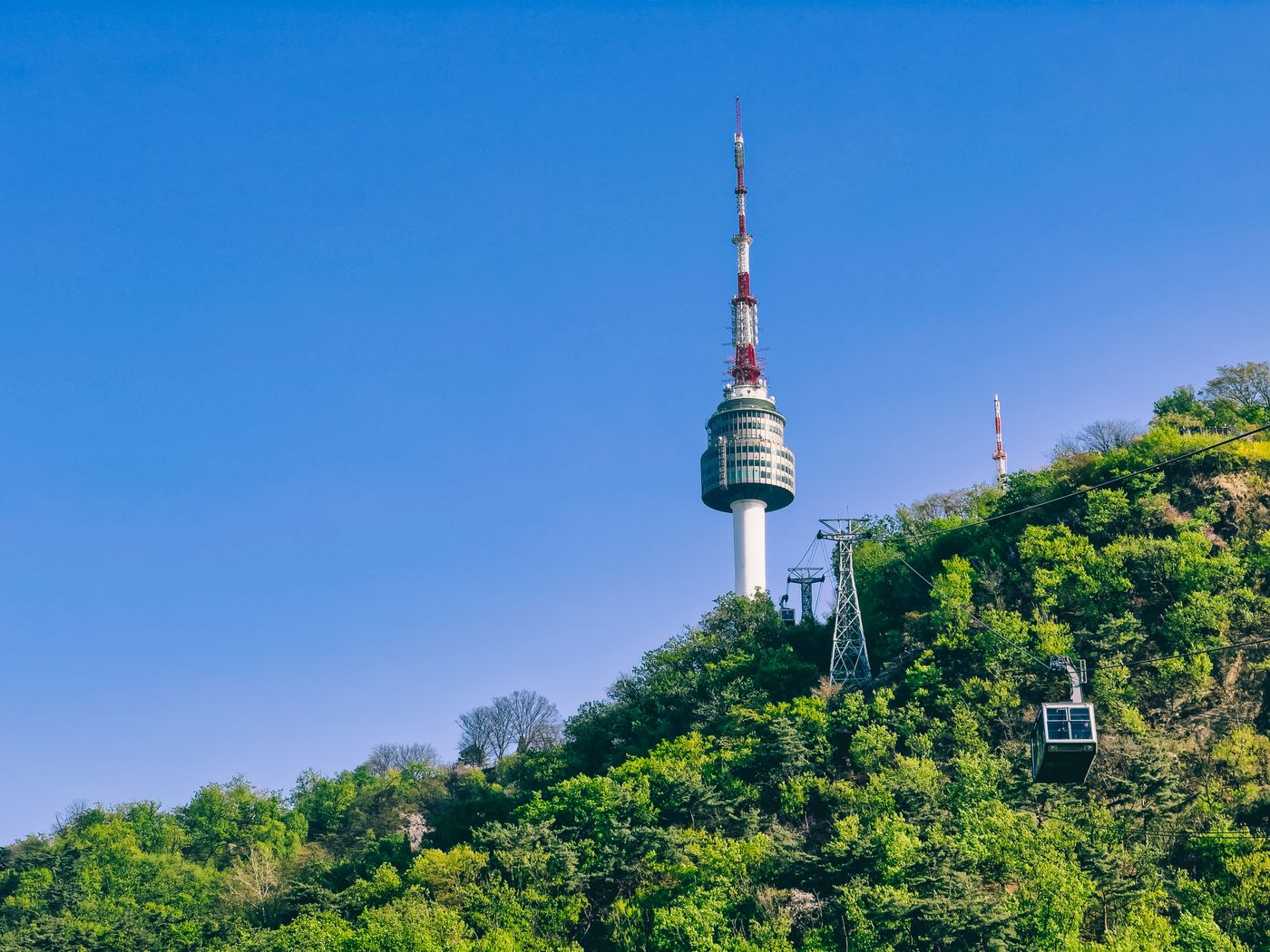
N Seoul Tower. The plaza is free and the walk up is free too — take the Namsan Orumi inclined elevator from Hoehyeon Station, Line 4, Exit 1 (about two minutes, landing right at the cable car ticket office), or ride the cable car itself for around ₩15,000 return as an adult, roughly ₩11,500 for kids — check the current rate when you book, since it's moved between sources over the past year. The cable car runs 10am to 11pm and the ride itself takes about three minutes, but the queue doesn't: 30 to 60 minutes at peak times, past 90 on weekend evenings. Buying online skips the ticket window, not the boarding line. Only the observatory deck inside the tower costs anything — the plaza itself, where most of the view already is, is free.
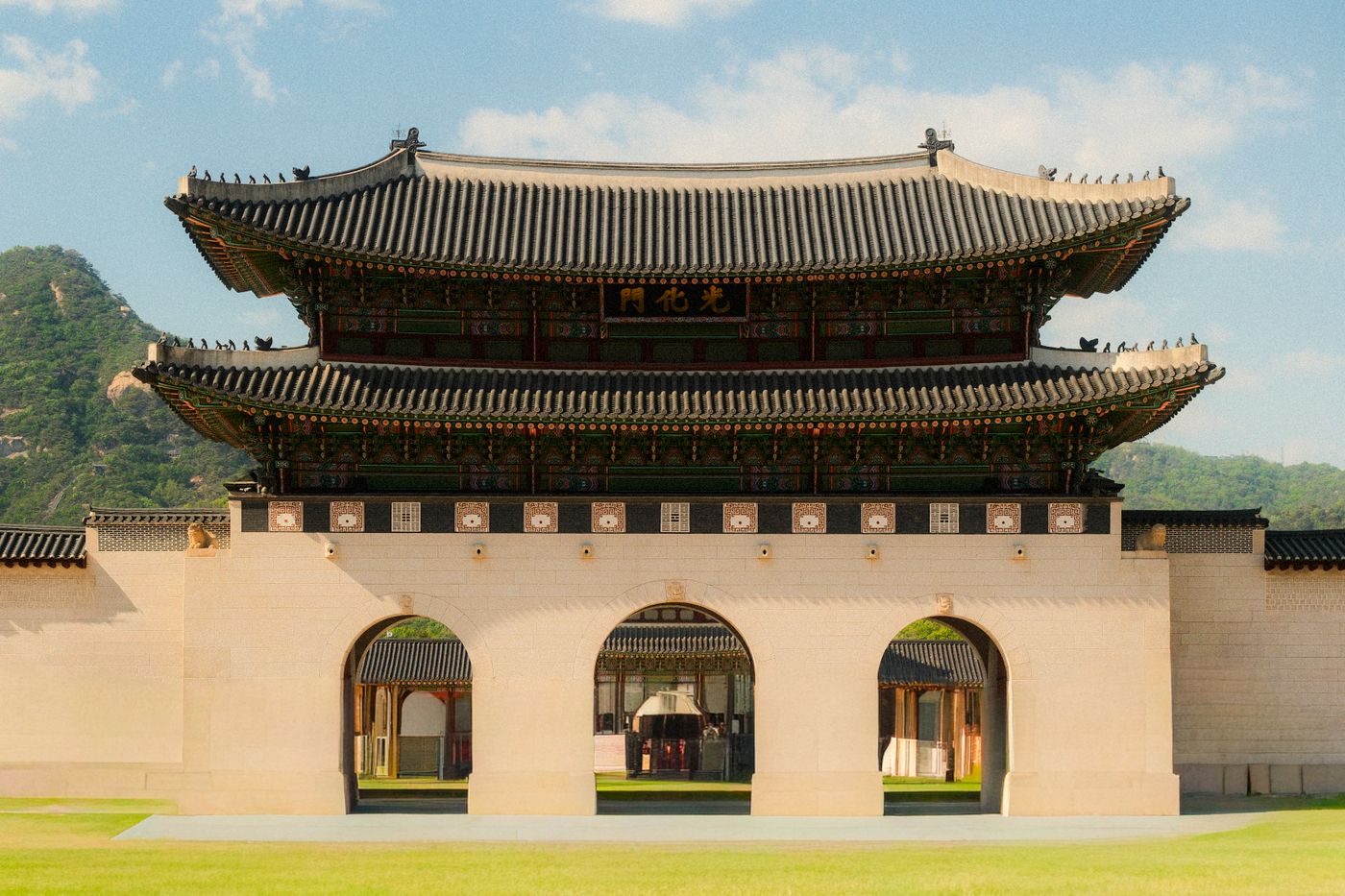
Gyeongbokgung Palace. Line 3, Exit 5. ₩3,000 for adults, free if you're under 19 or over 65, and free for everyone if you're wearing a proper hanbok — proper meaning a real top-and-bottom set; one-piece imitations, an outer robe worn alone, or jeans paired with a jeogori jacket will get you turned away at the gate. It's closed on Tuesdays, so don't build a route around it without checking the day of the week first. The Changing of the Guard runs at 10am and 2pm and is cancelled in heavy rain or snow; a separate gate-guard ceremony at 11am and 1pm continues regardless of weather.
Skip These, and Here Is Exactly Why
This is the section every other KDH location guide skips, because it requires checking facts that don't flatter the itinerary. Five stops that show up on nearly every list, and the specific reason each one wastes your time right now.
Seoul Olympic Stadium. It's a construction site. The stadium has been under remodeling since August 2023, isn't scheduled to finish until December 2026, and won't reopen until 2027 — and even then it's set to become the temporary home ground for the LG Twins and Doosan Bears baseball clubs through 2031, not a KDH photo stop. There is nothing to see here right now. Confirm the timeline hasn't slipped further before you consider it.
COEX K-Pop Square. Free to visit, and the giant screen is real — but there's no published showtime schedule, and the WAVE 3D content that made this screen famous online isn't running. What you'll get is whatever's in the standard rotating ad loop that day. Fine to pass through if you're already in the area for something else; not worth a dedicated trip.
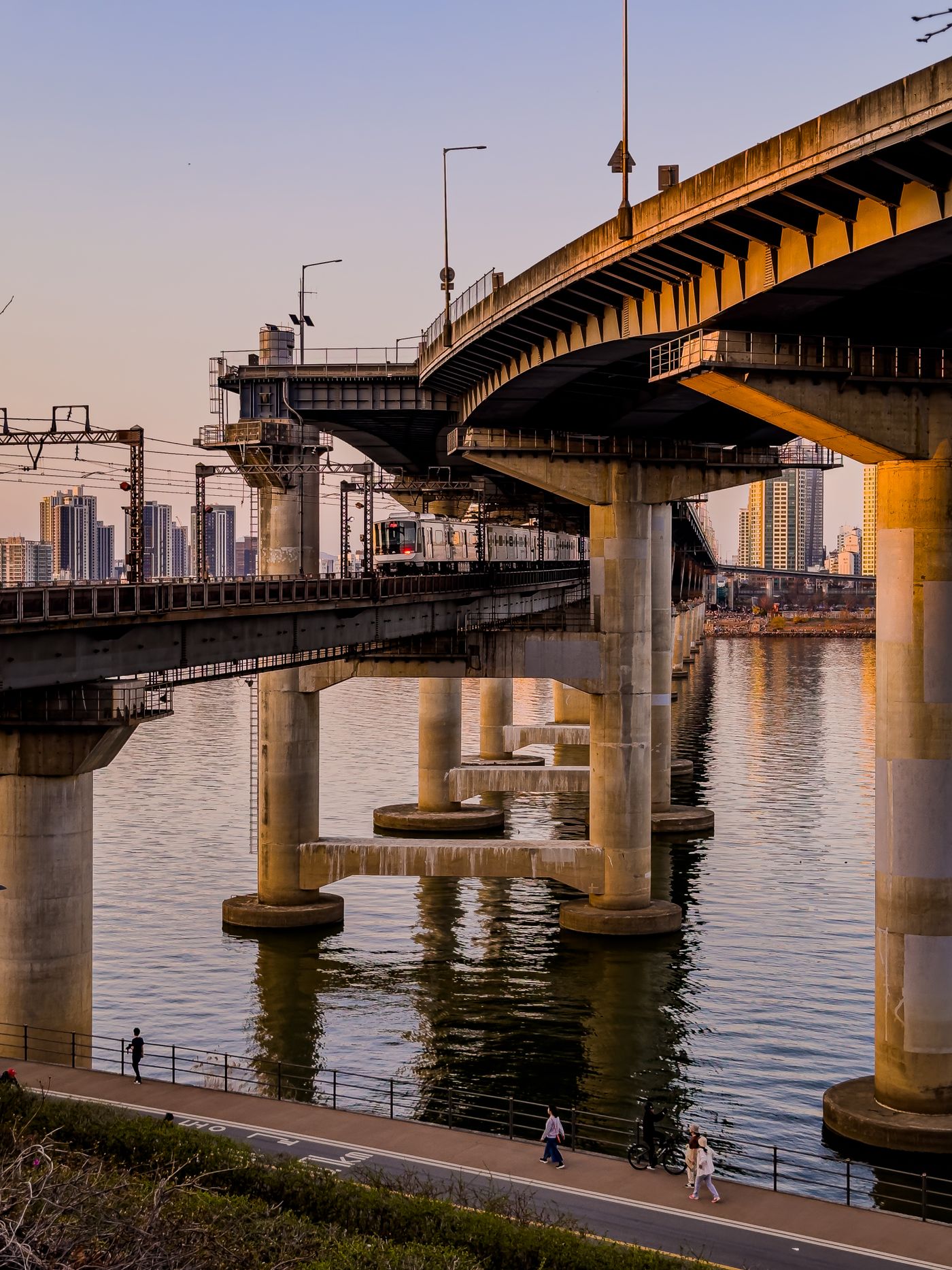
Cheongdam Bridge. You cannot walk on it. It's the one Han River bridge in central Seoul with no pedestrian path at all — Line 7 runs on a lower deck with an expressway above, and that's the whole structure. The nearest station is Jayang (Ttukseom Hangang Park), Line 7, Exits 2 or 3, built directly into the bridge — the only above-ground Line 7 station in central Seoul. It was renamed from Ttukseom Resort (뚝섬유원지역) in February 2024, and a lot of English guides — some official Seoul pages included — still use the old name. If you're navigating by an old map, that's why you can't find it.
Lotte World Tower. The film's version is inspiration only, and it's drawn deliberately taller than the real building — the animators said so themselves. Seoul Sky, the observation deck, runs around ₩33,000 for an adult ticket; confirm the current price before you go, since it's changed in the past year. It's a legitimately good skyline view. It is not a KDH pilgrimage stop, whatever a listicle told you.
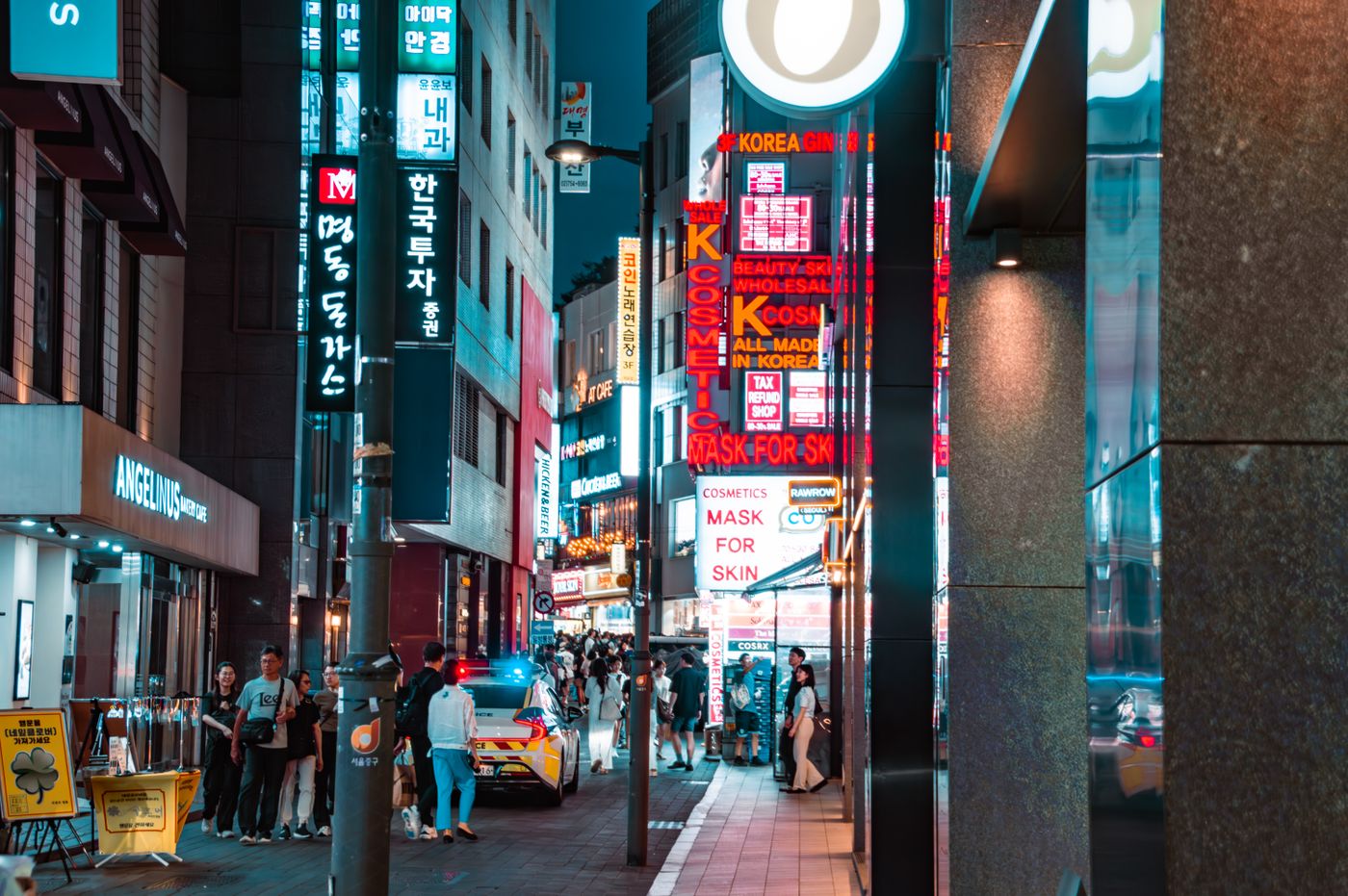
Myeongdong "as a pilgrimage." The neighborhood is real and it does appear in the film's Soda Pop sequence, so it's not wrong to include it — the problem is treating it as more than a five-minute stop on your way to food and shopping you'd do here anyway. Street cart hours aren't official or fixed, so don't build precise timing around any one vendor.
What the Franchise's Next Moves Actually Mean for a Trip Here
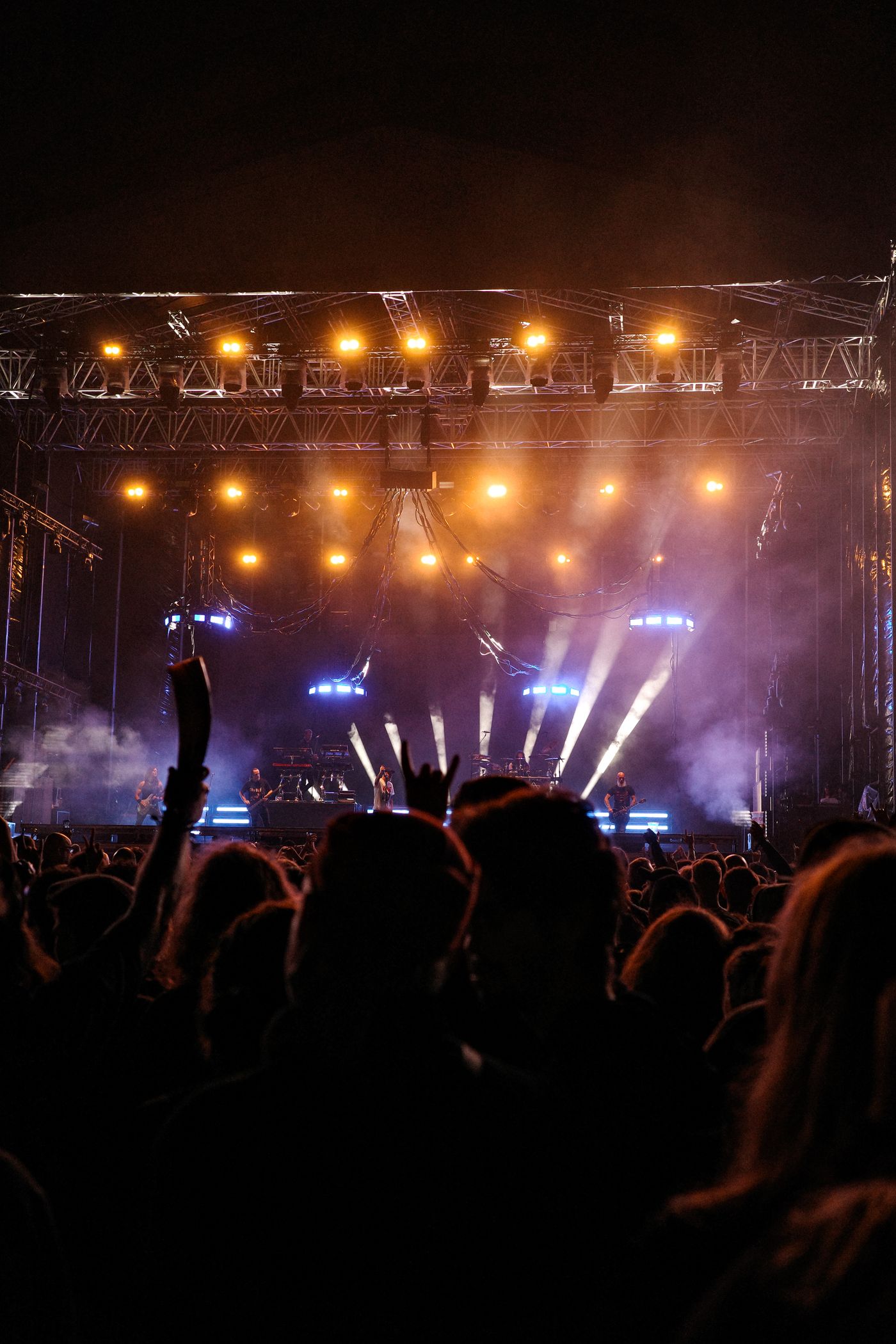
Everything above was true the week the film hit Netflix. What's changed since is that this stopped being purely a "spot the animated backdrop" trip. Seoul has already gone first, twice: an official pop-up retail experience tied to the film opened in Seongsu-dong in December 2025 before touring to Singapore, Hong Kong, and other cities, and a one-year-anniversary pop-up returned to The Hyundai Seoul in Yeouido in May–June 2026 before touring again. Both have since closed — neither is running now, and treating either as a current attraction will send you to a closed storefront. Separately, Netflix and AEG Presents have confirmed a live global concert tour is coming, but as of this writing Netflix's own tour page still lists cities and on-sale dates as "still to come later this year" — nothing is booked for Seoul or anywhere else yet. Netflix has also confirmed a sequel is in production, with directors Maggie Kang and Chris Appelhans both returning; no official release date has been set, though a 2029 target window has been reported.
None of that changes the location advice above — the stadium is still a construction site regardless of who tours where. What it does change is the honest pitch for this trip: this franchise has already shown it prioritizes Seoul for its real-world rollouts, so don't be surprised if a concert stop lands here. But don't build a trip around "Seoul is confirmed" — that claim belongs to a pop-up that already closed, not to the still-unannounced concert tour. Check Netflix's official tour page directly before you book anything around it; this is exactly the kind of detail that changes week to week and that no travel guide can promise you in advance.
The Rules and Traps at Each Location
Bukchon's Special Management Zone. This is the one section of this guide that can save you actual money. Bukchon was designated Korea's first overtourism Special Management Zone, covering roughly 34,000 square meters around Bukchon-ro 11-gil and parts of Samcheong-dong and Gahoe-dong behind Jeongdok Library — the red zone. Inside it, tourist visits are permitted only between 10am and 5pm; the area is off-limits to sightseeing from 5pm until 10am the next day. The fine for violating it is ₩100,000, reducible by up to half. A separate yellow zone along Bukchon-ro 12-gil is monitored but carries no fine.
There are real exceptions: residents and their guests, customers of shops in the zone, guests of accommodations there, and people simply passing through without stopping to sightsee are all fine. But a shop customer who lingers to photograph the surroundings or wanders after buying something is still liable — the exemption covers the transaction, not a loophole for photos.
The nuance almost nobody reports: enforcement here has leaned warn-first in its early months, with patrols there to advise before anyone is fined rather than to write tickets on sight. That doesn't mean the rule is toothless or that you should test it — treat the ₩100,000 fine as real and a warning as your likely first contact, not a bluff.
Jjimjilbang etiquette, if you go looking for "the movie bathhouse." You won't find it — it's invented, stitched together from the director's memory rather than any single real building. If you visit a real jjimjilbang anyway (a reasonable thing to do in Seoul on its own merits), the baths are gender-separated and require full nudity; visible tattoos can get you turned away or asked to cover up at some locations, a policy that predates any of this and has nothing to do with the film.
The National Museum of Korea bonus. It's not in the film, but it's the actual cultural source for two of its characters — the minhwa kkachi-horangi (magpie-tiger) folk painting tradition that director Maggie Kang has cited by name as Derpy and Sussie's origin. Ichon Station, Line 4 or the Gyeongui-Jungang line, Exit 2, about five minutes on a covered walkway. The permanent exhibition is free, open 10am–6pm and until 9pm on Wednesdays and Saturdays, closed January 1st, Seollal, and Chuseok. A museum shop badge referencing the same folk-painting motif has been sold in physical stores only since January 2026 and sells out often — don't count on finding it, and don't expect to buy it online.
How to Combine These Into Real Days
Route A — the confirmed-locations day. Start at Bukchon in the morning before the crowds build (and before you're anywhere near the 5pm cutoff), walk down to Anguk and take the subway to Gyeongbokgung, then finish at Naksan Park and the city wall in the late afternoon when the light is better for photos anyway. All three are free or near-free, and none of them requires you to backtrack across the city.
Route B — add N Seoul Tower. Same morning as Route A, but end at Myeongdong instead of Naksan, then walk or take the Namsan Orumi elevator up to N Seoul Tower for sunset and the city lit up afterward. Budget the cable car queue time honestly — 30 minutes minimum, closer to 90 on a weekend evening — or take the free elevator plus a walking trail if you'd rather not wait at all.
Route C — pair it with the concert tour, once it's announced. If a Seoul date lands on the calendar during your trip, treat that as the anchor for one day and the location walk (Route A) as a separate day rather than trying to cram both into one afternoon. Seoul's subway makes same-day combination technically possible; it just isn't a relaxed way to see either properly.
Should You Buy a Guided Tour?
No, with two honest exceptions. Every location in the "worth going" section above is reachable on your own with a T-money card and a subway map — none of them requires special access, a guide's local knowledge to get in, or group pricing to be worth doing. Paying a tour operator to walk you between free public spaces is paying for narration you can get from this page.
The two cases where a guide earns its price: if you want the Seoul City Wall hike properly explained as you walk it — the history of each gate and watchtower, not just the route — a walking-tour guide adds real value there. And if English-language logistics genuinely stress you out and a guide buys you peace of mind on your only trip to Korea, that's a legitimate reason to pay for one. Neither is "you need a guide to find these places."
One Honest Note About the Hype Numbers
You'll see figures cited everywhere about this film's travel impact — a reported 25% jump in global flight bookings after release, attributed to Trip.com Group; a reported 11% rise in jjimjilbang and sauna bookings that summer, attributed to Klook; and Seoul's own record of roughly 1.61 million foreign tourists in July 2026 alone, a 20.8% year-on-year rise, from government figures. Treat all of it as reported, not as something this article independently verified — that's simply the nature of secondhand statistics, and any guide claiming otherwise is overstating its own rigor.
What is independently checkable is Expedia's own Unpack '26 set-jetting list — the company's official list of destinations tied to shows and films worth visiting because of them. Korea and this film are both absent from it, alongside picks like Yorkshire, Tuscany, Wellington, and Palawan. Given the scale of the numbers above, that's a real gap, not an oversight this article is reading too much into — Western travel media's interest in this film clearly outpaces the availability of accurate English-language guidance about where it actually points you. That gap is the reason this page exists.
Frequently Asked Questions
Is KPop Demon Hunters based on real filming locations?
No. It's a fully animated Sony Pictures Animation film. The art department researched and redrew real Seoul locations rather than filming in them, so there's no "film set" to visit — only real places the animators referenced.
Where was KPop Demon Hunters actually set in Seoul?
Confirmed references include Bukchon Hanok Village, Naksan Park and the Seoul City Wall, N Seoul Tower, Myeongdong, COEX K-Pop Square, Gyeongbokgung Palace, Cheongdam Bridge, and Seoul Olympic Stadium — all named directly by Netflix Tudum with crew attribution.
Can I visit the bathhouse from the movie?
No — it isn't a real place. It's a composite the director built from memories of 1980s Seoul bathhouses. Any guide claiming to know "the" jjimjilbang from the film is guessing.
What is the Bukchon fine everyone mentions?
Bukchon's core alleys are a designated Special Management Zone. Tourist visits are allowed 10am–5pm only, and violating the restricted hours can bring a fine of up to ₩100,000, though enforcement so far has been warn-first rather than automatic.
Is the arena under N Seoul Tower real?
No. The tower itself is a real, confirmed landmark in the film — the arena beneath it in the story is invented. You'll get a genuine city view from the tower and plaza; you won't find any arena.
Do I need a tour guide to see these locations?
No. Every location worth visiting here is reachable independently by subway. A guide is worth paying for only if you specifically want the Seoul City Wall's history explained in depth, or if you'd simply rather not navigate English-language logistics alone.
Is the KPop Demon Hunters world tour coming to Seoul?
A concert tour is confirmed to exist, but Netflix hasn't announced cities or dates as of this writing. Separate pop-up retail experiences already ran in Seoul — first in December 2025, then a one-year-anniversary pop-up in May–June 2026 — before touring to other cities each time; both are different from the concert tour, and both have already closed. Check Netflix's official tour page before assuming Seoul is on the concert itinerary.
Is there a KPop Demon Hunters sequel?
Yes — Netflix has confirmed a sequel is in production with directors Maggie Kang and Chris Appelhans both returning. No official release date has been set, though a 2029 target window has been reported in industry coverage.
Sources: Netflix Tudum's official locations guide, Netflix Tudum on the sequel, Netflix's official world tour page, The Korea Herald on the Seoul pop-up, and The Korea Herald on the Bukchon Special Management Zone. Photos via Pexels; graphic by SeoulCut.
ABOUT THE AUTHOR
Written by Seoul Cut, a global trade professional with 20 years of experience across Europe & Asia. I share practical, zero-tourist-trap guides to Korea drawn from years of hosting international visitors.
🎁 Early Bird Special (First 50 Readers)
Get complete Korea travel & guide resources with offline cheat sheets and exact fare estimates. Limited to the first 50 downloads! Use code SEOULCUT at checkout.


